Wednesday, April 29, 2015

Global Violence and For Those Who Can Tell No Tales

World Becoming Less Violent: Despite Global Conflict, Statistics Show Violence In Steady Decline

http://www.huffingtonpost.com/2011/10/22/world-less-violent-stats_n_1026723.html

Read this article. According to UN statistics and the research of Harvard psychologists, the world is not as bad as we think it is.

- The rate of genocide deaths per world population was 1,400 times higher in 1942 than in 2008.

- There were fewer than 20 democracies in 1946. Now there are close to 100. Meanwhile, the number of authoritarian countries has dropped from a high of almost 90 in 1976 to about 25 now.

Murder in European countries has steadily fallen from near 100 per 100,000 people in the 14th and 15th centuries to about 1 per 100,000 people now.

Without disregarding our violent past, the truth is that violence really is in the past. For Those Who Can Tell No Tales studies the implications of a post-violent Europe as seen by the previously devestated country of Bosnia. One in which a warring history is the greatest threat to present day peace. There is disagreement over the solution to the problems of unpunished perpetrators, and unavenged victims. The film's American tour guide refuses to mark a Bosnian hotel as the sight of the raping of 300 women or the murder by drowning of thousands. He claims there are enough obstacles to the Bosnian tourist industry without heaping on doses of unwanted history.

Ignoring this history, however, comes at a cost. There are still victims – both direct and indirect – occupying the towns and feeling the burden of the terrible crimes of the civil war. Furthermore, it can be hard for a country to build its morale as a whole when some great injustice lies just below the collective consciousness. That the film's protagonist, a journalist/tourist who stumbles on this mass murder site, is taken into custody and threatened by the Bosnian police reveals one of the main issues with Bosnian denial of wrongdoing. As the journalist is threatened and asked to leave, we can interpret a subtle acknowledgement by the Bosnians that there is something to remain hidden and a broad hope that the public's eye will wander before whatever there is to discover is brought to light.

Her candle honor to the 300 victims of rape in the hotel where she sleeps reveals our modern day heightened sensitivity to violence. It is so prevalently discussed in modern media. We can assume that this is not because Americans have grown desensitized to violence, but rather that the lack of violence must be balanced out by our cultural acceptance of violence in cinema.

The Cannes Film Festival - the Convergence of Cinema

Last summer I traveled to Cannes through the Creative Mind Group - the same organization that is sponsoring Ilya and Heliya's travels this semester.

http://thecreativemindgroup.com/

While most of my trip to Cannes was spent producing the 5 minute short film How to Have Ever https://vimeo.com/97507357 I spent a lot of time exploring the town of Cannes.

The Festival is, without exaggeration, one of Europe's most prestigious and anticipated events. That said, the screening schedule was primarily occupied by American films. Even "How to Train Your Dragon 2" made it to the Jury. Many other Jury films, such as the French "Two Days One Night" and British "Mr. Turner" starred actors well known to American audiences; Marion Cotillard and Timothy Spall (Peter Pettigrew in Harry Potter).

As an international event, the language spoken at the festival is English. To get by in the town of Cannes, French is helpful, but unnecessary. As a filmmaker scouting locations, a workable French vocabulary went a long way towards winning favor with the locals, but a tourist could go the entire Festival without a single bonjour and never realize he'd left the states.

The Cannes Film Festival, historically, has always been the haunt of America's biggest celebrities. However, the sheer infiltration of the highest cinematic honors at Cannes by American cinema remind us not just that the medium is dominated by American culture, but that European reception of American cinema is highly important to Hollywood. In an age where the most important market is the global one, festivals like Cannes accommodate not just the international marketing needs of the film industry, but the cultural exchange that allows for profitable and universally appealing narratives.

As a filmmaker then, it is incredibly important to visit the Cannes Film Festival and other festivals of its sort in Europe/Asia/Africa/South America. It not longer works to be ignorant of the cinema culture
of other countries. As influential as American films are, the most commercially successful ones take advantage of their knowledge of foreign markets.

Immigrant Identity: The Mask of the Political Refugee

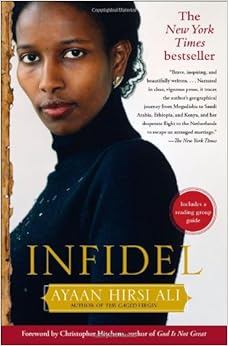
Ayaan Hirsi Ali, pictured above, is an employee  of the American Enterprise Institute, a think tank designed:
 "to defend the principles and improve the institutions of American freedom and democratic capitalismlimited governmentprivate enterpriseindividual liberty and responsibility, vigilant and effective defense and foreign policies, political accountability, and open debate" 

Her political career in the US is only the latest chapter of an incredibly long international journey that began in 1969 in Mogadishu, Somalia. The child of a deeply religious traditionalist mother and a politically powerful reactionist father (a leading figure of the Somali revolution) she was often torn between the high demands of her clan and an educated understanding of her human rights. 

She bounced back and forth between a strict adherence to the burkha and a rebellious pre-marital relationship, an obedient submission to her physically abusive mother and a hidden collection of Western literature. She bounced around geographically as well, her family forced to flee Somalia due to her father's prominence in the fight against the country's military dictator Major General Mohamed Siad Barre. She grew up exposed to all sorts of variations on Islamic and African life – extremist Islam in Saudi Arabia, intolerant anti-Islamic sentiment in Ethiopia, to a comfortable upperclass life in Nairobi, Kenya.

Her childhood, charmed by the wealth and resources of her important father, was decorated with both religious and academic education. While the girls at her school in Nairobi steadily abandoned their education for marriage, Ayaan developed the conviction to avoid this fate, to not simply marry the much older gentleman her father selects for her and raise his children as one of his many wives and run his house. Her decision brought her, against the strong will of her clan, to the Netherlands, where she requested political asylum to escape the clan members who pursued her.

She received a residence permit within three weeks of arriving in the Netherlands, although it was typical for applicants at the time to have to wait eight months for a decision. How? She had the gift of education. She knew how to frame her story to appeal to the powers that be, to concoct a story of danger, real physical need for asylum. The gatekeepers of the Netherlands (a country with a far more liberal border than most) can only allow for so many political refugee immigrants. Like Okwe and Senay in Dirty Pretty Things, Ayaan developed the identity that was expected of her. While not in direct danger, Ayaan did face a life of oppression underneath a husband she didn't want. It does not meet the standards of an immigration council who is trying to protect hunted individuals from death. However, Ayaan was able to play the system.

Unlike Okwe and Senay, who had truly dangerous circumstances awaiting them in their original countries and seemingly no hope for upward mobility or even personal security in their host country of Britain, Ayaan did manage to enter herself into the education system of the Netherlands, and eventually into the political spectrum. Ayaan became a member of the Dutch parliament acting as a resource for female empowerment and the injection of human rights into traditional clan Islam's treatment of women.

Her memoire is a fascinating bildungsroman about the journey of an oppressed girl over the obstacles of tradition and the laws of immigration to her free, empowered, adult womanhood.

BLACK GIRL La Noire De


As a complete my senior year at USC there was a lasting thematic overview Francophone African films that I wanted to offer to the class. Unlike Hollywood, these flux of African art cinema were far from glamorous, escapist or jungle melodramas present colonialism of American films and French films. African Art cinema  like Black Girl were realistic thoughtful low budget films that reflect a variety of issues affecting contemporary Africa.  As tribute to the films political issue and colonial possession given the mood of the character Diousana she fights with domestication and with the Madame over a mask that threatens her losing her identity, I believe the director Osamene Sambene highlighted the cultural identity of many Africans repressed by colonial attitudes. In the film as Diousnana packed her masks, her clothes, braids her hair, gives back the apron and the money given to her for her services then proceeds to commit suicide in the bathtub with a razor. Her naked black body floats in the bloody bath water as the last shot of the sequence is of her back suitcase and African mask. Next the film’s perspective shifts subsequent scene of French white people on the beach eagerly sun bathing to darken their skin like Diousana. As they read her article Others are untouched by her death.   Sembene color schemes of Diousana blood and the sunbathing as the African essence that is still suffering from the post colonial repression by the French.  Maybe her transformation back to her African identity and the blood stands for the blood spilled as she is liberated from her French employers rule.  In this matter Ousmane displays the visual medium to comment on the social and political conditions still not resolved in Senegal by the French occupation.  But what stands more as a sufficient motif in the film is the mask.  
As Diosana's French male employer return Diousana’s suitcase and mask to Dakar the theme of the music transport us back to African.  As he travels in the sun’s heat through the African village, native culture surrounds his white European stature as he carries the burden of the mask and suitcase through the slums of Dakar.  As the mother refuses his money and the young boy dons the mask the voice of distrusted seemly follows the Frenchmen back from where he came.

Tuesday, April 28, 2015

Don’t Look Now


Don’t Look Now is Nicolas Roeg movie made in 1973. This movie is a psychological thriller/drama, an independent British-Italian film. As an Art cinema Movie it was one of the interesting Italian art cinema movies i have watched. This movie is was adapted from the short story by Daphne du Maurier. It follows the story of a married couple who travel to Venice after the accidental death of one of they young children, their daughter. The husbands job is to restore churches, so he gets an offer in venice and they move. when they arrive to venice they meet two sisters, one being blind who were psychics, had a power to talk to souls of the dead and see, feel, and all to spirits. One day when the couple are having lunch the two sisters tell the wife that they can see the spirit of their dead daughter siting haply in between the couple. After that day the wife started hanging out with the two sisters but the husband did not like this idea because the wife was emotional and psychologically not stable from the traumatic experiences of loosing her daughter. The two sisters tell them that the daughter is trying to contact them and warn the from danger. The husband starts seeing his daughter in her red coat running around. The director used the color red that represents blood to make the movie more intense. This movie had a lot of hallucination in it that it was a little bit hard to follow. It kind of reminded me of Cache, because some parts was not clear if the husband was hallucinating or the event was actually happening. For example there is a scene were the husband sees his wife in a black dress on a boat standing next to a coffin. But the wife was suppose to be out of town so he tries to reach out to his wife and he finds out that she is actually back in venice and it turned out that the wife wasn't in venice. But then at the end of the movie we see the same scene again, the wife in a black dress standing on a boat next to a coffin, which is his husbands coffin because he passes away at the end of the movie.  This means that earlier in the movie the husband had seen the future, hi wife standing next to his coffin when he dies. The husband is killed by a creature whom we do not know anything about, what she was or what she wanted. An old short lady in the dead daughter's red coat.

It is a very interesting film and i really do recommend it if anyone is interested in thrillers and psychological movies. 

The Conformist

Recently I saw The Conformist with some friends. The film is a political drama with a very dense plot that's easy to get lost in. So this film is definitely worth an additional watch. The best part of the film is the cinematography. Every shot is beautifully composed. Perhaps some of the best cinematography I've seen in films during its time. I can watch the film and ignore the plot so I can just fathom how well choreographed each shot is. The film also uses many different locations. The use of many extravagant places makes the film's world appear to be endless. The film is worth watching if you enjoy political films that present a lot of information. However, the film never gets boring, and I think writing is very clever. I'd stay away from this film if you easily tune out from too much dialogue. This film requires a lot of patience, and the right mood in order to really enjoy this one.

Neorealism in Zentropa and Lamerica

Looking for a comparative angles between Zentropa and  Lamerica it might seems perverse to propose that both films established strong sense of naivety in the roles of the protagonist who are both from elsewhere but not far from anywhere close.  On the one hand Lar Von Tier creates offbeat noir German translation layered in with convention of a horror-thriller genre thats’ instigated by a femme fatale constructing dark to white element of romance and intrigue.  While on the other hand Gianni Amelio narrates his own auteur impression with a mise-en-scene shots that strips his character of his identity alienating him in a continuity of post-modern Neorealism.  Both films use a travel motif as desire for each character to confront their problems. In comparison there is not so simple relationship they each share with their visiting nation.
The is a tentative feeling by both characters to implant their own alternative ideas to the sub-national state of Albania and supranational state of post- World War Germany. The contrasting dark spatial image of Germany, infiltrated by an American and the ease of mobility by the Italian within Albania move the narrative from a national space to an international perspective. Projecting some major similarities the films question the integrity of each characters central of point of reference and the integrity of their double occupancy. In a state parallel existence each scene gives a visual inquiry to the ruins of Frankfurt and the ruins of the Albanian countryside as metaphor that ruptures their lives.  The protagonists become embroiled in scenes where “the image (of Germany and Albania) becomes projection by others onto a divided and uncertain space” (Glat184).  This is a profound statement but what is translated by  the narrative can be translated as how Neorealism is foreground in each film. As a relationship is constructed between the spectacular and the geopolitical each film communicates stages of European-ness as a contextual problem by definition.  These films inherit the periods of 1945 and 1994 but they also map the cinematic space and time of a European psyche connect to Germany film theory.

A Hard Day's Night


A Hard Day's Night is a British comedy movie made by Richard Lester in 1964 following the lives of the battles for a few days. This was one of my favorite foreign musicals I have watched this semester. It can kind of serve as a documentary about the Beatles and how their everyday life was. They had to always run away from their fans who followed them and would attack them overtime they were seen. The sound track of this movie was on point. right after the movie i downloaded the soundtrack and listened to it all day for the next week. The acting was also very good and entertaining; being very comic and exaggerated. I really enjoyed this movie because i never really learned about the Beatles before and it was a nice, fun way to get to know the 4 characters. What was most interesting to me was how each of them had a totally different personalities that they brought to the band. looking at them before watching this movie they all looked alike and not unique; but when i watched this movie, i felt closer to each individual and learned about each one's character. 

we follow the band when they go on a train traveling to London for a performance. On the train the boys meet some girls and find one of the boy's grandfather whom they have to take with them to London. They are forced to take care and look after the grandfather who is a crazy old man always running away and trying to steal form and sell battles tickets for more expensive price to crazy fans. This character brings so much comedy into this movie. 

I extremely recommend this movie.
you will not regret it. 

Zentropa

I liked this film. The opening hypnosis sequence instantly drew me into the world of Zentropa. I think its fascinating how the film blends different genres together, such as horror and film noir. The film is very experimental from the way its cut to the narrative. The surreal imagery makes the film so captivating to watch. Many of the suspenseful scenes felt very much like Hitchcock's films. The film is black and white, but at particular moments the image would gain color. I don't think i can come up with a reason for the film's use of color, although it was a pretty cool effect. My favorite scenes of this film were probably the opening scene and also the final scene of the film. I can still hear that haunting voice over of Max Von Syndow when I'm about to sleep.

Xfactor British TV Vs. Xfactor USA TV

I personally first started watching the British version of X factors. It was very interesting for me because it is was different than American idols where it is just a competition for singing. The X factor opened up  auditions for other talents as well which made it more exciting. People performed crazy dances, Crazy tricks, played amazing instruments. Then in seven year the USA version came to Television which was a bit different than the British version, excluding the competition only to vocal auditions. A fun fact, I auditioned for the USA X factor at the USC arena in 2012. It was definitely a very interesting, exciting experience. It gave me a good sight of how these TV shows actually work; because we watch a lot of people that don't have talent come on the show and make a fool out of themselves. So I learned that there are three pre auditions before meeting the actual judges. When you go through the pre auditions you either have to have great talent in singing or be extremely unique and funny for the comedy entertainment part of the show. For example there was a man dressed in a full santa clause suit and he did not have any talent in singing but he got a golden ticket during the first round of pre auditions.
I spend 16 hours in the arena full of singers, each practicing in every corner of the arena; it was extremely intense. But it definitely was an amazing experience and I always look back at it.

Carmen Meets Borat and The Romanians Are Coming

I just wanted to compare these two documentaries since I could find a lot of similarities between the way that Romanians were portrayed. 

In Carmen Meets Borat, as we discussed in class, people living in Glod did not seem too bothered by by Borat in the beginning; as they watch the show together, they are also laughing out loud. But when they begin to hope when the German lawyer comes to town suggesting that they can earn money by suing Sasha Cohen, Carmen’s family begin to get leaped apart.  Her dad was so hopeful about all the changes that he can bring to town if they were to get this money. But his dreams seemed so big that the audiences can sense that these are not likely to be achieved. And when the lawyer bails on him, Carmen’s dad seems unable to recover from his despair. Without the help of outside, these people are so vulnerable and helpless.

The Romanians Are Coming is similar in a sense that the Roma gypsies who go to England to earn money also seem hopeless. They don’t speak the language, and are hated by most people who live there. I felt so sympathetic to these people who were willing to do anything to support their families back home; however, I knew that despite my hope of them succeeding, they will not be able to get a decent job. But one difference between these two documentaries were that at least in The Romanians Are Coming, these people tried to change their situation themselves. While they despaired when their hopes seemed unachievable, they still try to find a job and do something about their lives. However, in Carmen Meets Borat, although I did understand Carmen’s dad’s behaviors, he did not try to get over his situation when his hopes failed him. 

Honestly, since I’m not from Europe, I don’t completely understand all the historical and social reasonings behind the gypsy hatred. But I do wish that this situation would someday get resolved, and I believe that powerful shows that represent these people’s voices would help a lot with this effort. 

My Big Fat gypsy wedding

when I first watched My Big Fat Gypsy Wedding, I expected it to be like the movie My Big Fat Greek Wedding; but it was nothing like what I expected. This show follows young gypsies that are getting married with their crazy traditions. Of course this being a drama, each episode has a climax where the bride, the groom, or one of the family members hits the rockbottom; the families fight, Something goes wrong during the wedding. These type of shows attract a lot of audiences because they are entertaining. It was definitely fun watching a few episodes of this show in class because I did not know how crazy and dedicated the Gypsies were toward their traditions and family rituals. One most disturbing thing i noticed in their ways of throwing a wedding is the crazy styles of the bride's dress and the crazy theme colors. In the episode we watched, the bride had ordered the longest tail for her dress which was extremely hard to carry and the theme of her weeding was pink, a pink limo and pink themed outfit of the groom was very shocking and crazy. It was fun to watch how people with different cultures and different traditions go about their weddings. 
This show is successful because people love watching other people get married and they are also interested in watching something dramatic happen, which does in almost every episode. 

Redefining Your Immigrant Identity


As we discussed transculturality in Iciar Bollan's "Flores De Orto" - Flowers of Another World I would like to offer this postscript by author Sakhi Vyas from Kalamazoo College Cache Digital Archive as my mandatory post to replace the film such the Grbavica. Since i could view the film I wanted to relate this article to trace our discourse with multiculturalism and what coded meanings replaced the women desire for a better home in the country of origin.  I believe if we analyze some of the anxieties of ethnic people living parallel ghetto societies in Third World nations there is a failure to protect the values of multiculturalism. I think the best examples come from Europe but in the films plot the elements emphasize the racial exclusion of Central American Latin Women and rural Spaniard district.  The social exclusion but the similar Latin groups proposes a contradiction in the context of acceptance of different social classes bit propspes and active assimilation of translocal forms of solidarity discuss in the Maria Stehle article about the crisis of multiculturalism.  All through our class segments I woonder how does one offer themselves and leave behind there trusted land in the hopes of a forced globalization in the European Union. A union that deterritorializes the Questions of community.  I found Iciar Bollain's film enlightening as a Dominican single father fore in my past I too have constantly raised questions of what will return to once I search for transnationalism in other countries of my parents origins. Peace to Senegal and praise to the Dominican Republic. This helps me.

https://cache.kzoo.edu/handle/10920/27401

As a second generation Indian in America, I have long been exposed to stories of the immigrant experience, though I was never able to fully immerse myself in the nuances of immigration until I heard narratives from various members of two local diaspora communities. Using those personal accounts as well as published studies on diaspora, I began to find common threads in the stories of the immigrant experience: identity transformation, issues of nationality, and the relationship with the home country among others. This piqued my interest and led me to further study diaspora and immigration issues relative to the big picture of globalization. In looking at the movement of people, I became fascinated with immigration trends and the counter-currents that flow in opposite directions. Remittances are one such example of counter-cyclical movement; immigrants tend to move to certain regions and their remittances move in the opposite direction. Remittances and other returns are tangible representations of intangible connections such as kinship or identity, which keep the immigrants connected to the home country. I utilize the connection of remittances between the immigrant and the home country to propose that the individual immigrant is an active agent in driving the forces of globalization. The interviews and subsequent analyses as well as other secondary research aim to elucidate the immigrant's role in globalization. I began by asking simple questions and uncovering complex ideas. Who are the immigrants that settle abroad? What is their purpose? In sending home goods and money, what does the immigrant say to his/her own national and personal loyalties?How does this fit into the scale of globalization? Using this core of ideas, this study will outline the means by which immigrants actively pilot the forces of globalization through remittances. Immigrants move out of their home country and into a host country; this simple act of settlement abroad is the first step in globalization. Thereafter, immigrants become conscious of an emotional attachment to the country of origin. This emotional aspect of nationality and identity trigger a desire to maintain connections with the home country. Tangible remittances or other substantive returns kindle the global economy as the simultaneous awareness of identity shifts the immigrant paradigm towards transnationalism. These two forces, propelled by emotional connections, catalyze globalization; I argue, therefore, that immigrants are the active agents of globalization.
BLACK SOUL - Revelant Public Event

Black Soul is a true story of the real life Italian mafia Carbone Family original from Africo, Italy under the Ndrsanghets circle. The film was inspired from true events in the novel written by Italian poet and philospher Gioacchino Criaco. The film first premiered at the Venice Film Festival in 2014. Its plot is focused on the Carbone Family as they engaged in family business of the drug trade. Director Franceso Munzi spins a violent tale about the three Carbone brothers Rocco, Luigi and Luciano as they are faced with stopping a blood feud created Luciano youngest son Leo.  The eldest brother Luciano is played by renowned Italian actor Fabrizio Ferracane as he portrays the eccentric hothead gangster that chosen to herd goat instead going into the family business.  He son shows little respect for his Father's choice of life and is more influenced by his flamboyant uncles. Cast as Rocco actor Peppino  Mazzotta plays the cool sober accountant of the family who's as a family man is married Northern Italian wife Kay Corleone played but the award winning actress Barbora Bobulova.  Rooco always disapproves of Luigi's spontaneous lust for blood.  Luigi is played by Marco Leonardi  from the romantic cult followed film "Like Water for Chocolate".  The teenage nephew Leo played by newcomer Guiseppe Fumo turns the families luck upside down when she shoots up a local bar owned by a rival family he ignites a gang war that remain silent for many years.

Reserved viewing of "Black Souls" was scheduled on April 22  at School of Cinematic Arts in Room 108. As I arrived I was surprised at the very few people that arrived to see a Munzi film who's productions "Saimir" and Rest of Yor Life showed a strong following in European cinema. On the released date "Black Soul" opened in the USA with a gross profit of $6,286 on April 24 in the USA and has net profits of $45,201.  It has a potential of contributing to European and US gangster genre chronicles such the Godfather weaning audiences back into the excitement for a dark psychological thriller. The film lacks some of the mis-en-scene cinematography of other films, I think the impressive views of the wild Aspromonte mountains could have been accented more.  But the authentic natural acting prowess by the three brothers does intensify the crime-riddled drama.

"Are the crooks coming for dinner?" was the best scene stealer of the movie where the charismatic wife of Rocco as she gauges her husbands thoughts before the inevitable bloody showdown.  The motif of violence begets violence hovers over the inherited moral choice by each generation as the brothers are sworn to protect their ancestral reputation. Foregrounding the spirit of a pure conscious the film ends with an unwelcome twist but piercing monotones of dignity help create the belief in the anti gangster hero.  Good promises to this film.

Bicycle theives

Bicycle Thieves was the first european movie I watched this semester that really really caught my attention that i have to talk about it. considering that this movie's plot is the most simplest plot of all time, but it still manages to get the audience sit through it for an hour and half just watching a man and his son wondering the streets of Italy looking for a stolen bicycle. The story behind this movie is about a man loosing his bicycle which his work is dependent on and him going on a journey with his son to find his bicycle. there is little dialogue in this movies as well. The filmmaker and director did an absolutely amazing job because they made a very simple story so enjoyable and watchable. After watching the movie, I read the book that was written about this movie and how it was made. Almost all of the shots were outdoor and shot in the streets of Italy. None of the shots were staged, they were taken during regular hours of the day when people were in the streets going about their normal lives. He did not ask anyone to do anything different, the director wanted this movie to be as realistic as possible. There is a scene where the bike is being stolen and the main chacaracter is running after the bicycle thieve, trying to stop him. He gets into a taxi and asks the driver to drive and follow the thieve. In this scene the street of Italy is very crowded and there are traffic lights up and running and the people on their bikes, cars, barefoot running from one corner to another. This scene was not staged at all; It was filmed in the middle of the traffic that was happening during that day in the street and it worked perfectly for the scene they shot.

I have never liked black and white movies but i enjoyed this movie so much that I would watch it over and over again.

Borat

This was my second time watching Borat, and it was a fun watch. The first time I've seen it, I was in middle school with one of my friends who was obsessed with Borat once it came out. I remember watching parts of the film with him, and it was very special experience, because that friend unfortunately passed from his battle with leukemia. Now, every time this film comes up, I am instantly reminded of the hilarious moments I spent with my friend watching this film as a kid. This film was so big at the time, I remember going to school and every guy who thinks he's cool would be quoting everything in a terrible accent. Recently, I was watching the new Unbreakable Kimmy Schmidt on Netflix, and they even reference how guys think they're cool by quoting Borat. It's interesting how such a film could be so powerful enough to become a part of our everyday culture. Borat definitely appeals more to younger adult males, with the exception of some females who find the appeal in this sort of dominantly male humor. I admire the shows parody of public pranking, which is very widespread since the advent of youtube. Borat, I think, did his performances tastefully, compared to the many kinds of ridiculous prank shows that involve real life threats and putting themselves in real danger. The reactions throughout Borat really demonstrated how Americans feel about people who do not share the same culture as they do. In fact, it really revealed how intolerant some of us really are when an unidentifiable individual prompts us to react truthfully to their unknown nature.

The District

From the film's opening, you can already expect the chaotic ride you're about to participate in. From what we learned initially about the film, I was excited to see how Hungarian filmmakers would animate a South Park like representation of the Hungarian ghetto. However, I lost the appeal in the first couple of minutes. It was hard to acknowledge the film's political ideology when its buried within the horrific imagery of the animation. Characters were so foul looking that I did not want to look at them. Their voices sounded unpleasant. The grittiness of the entire world of the ghetto was so appalling that it overshadowed the plot. The plot was so absurd, although expected, that I loss interest not too far into the film and fell asleep. I remember waking up during the scene where they were disposing of the wooly mammoths, and from there I was completely lost and had to reread a plot summary to figure out what the hell was going on. Also, the incorporation of Roma hip hop was even worse, particularly because I found the music to be pretty bad, even though it was relevant. I love animated pictures, but this one was overwhelmingly disturbing with its ugly depiction of the Hungarian ghetto.


My Big Fat Gypsy Wedding

I always found reality television to be quite troubling. The nature of these shows always seem to have negative influences on the people that frequent this type of filmmaking. One criticism I have towards reality television, is that many people don't understand how much of these shows are staged and scripted, creating this illusion of validation for spectator. My question regarding shows like My Big Fat Gypsy Wedding, is what are these types of series trying to promote? After some research, its easy to deduce the inaccurate representation of Roma culture in this show, yet many watchers will accept these representations as authentic. One issue I have with shows like these is that even though people take pleasure in criticizing the subjects of these so-called "documentaries", the act of engaging with these texts is enough to keep these shows running. Studios behind reality television market these dysfunctional families to profit from them, not fix them. I have to admit that the illusion behind reality television is genius, and I think there can be ways to subvert the current standard of reality television and create something more appealing than just something we can mock. In My Big Fat Gypsy Wedding, I couldn't move on from the story about the father who takes his daughter to child beauty pageants. There's something very disturbing about the father's goals for his daughter, and just child beauty pageants in general. If anything, it makes me ask myself, what's the point of including all of this?


Black Mirrors Review

Though Black Mirrors has been on air in the UK since 2011, its release on Netflix this year, has made it the hottest new show in the U.S. Each episode features an entirely different cast and setting however all the stories touch upon the theme of technology going awry in the not-so-distant future. The show intertwines, social critique and science fiction with explosive results. Both the format of the show and the content, touch directly onto the pulse of the modern viewer. Over technologized and desensitized,  the modern viewer is the expert click-baiter, he can give you an educated overview of just about anything thanks to wikipedia, and he knows all the breaking news before you do. Black Mirrors is informed by the same vein. It touches so broadly upon so many different issues, that the connections to real life are readily made. The metaphors are blunt and the storylines are high concept. It is the caviar of modern TV because it is a scintillating product of high and low culture at every level.
For instance in the first episode,“The National Anthem”, the Black Mirrors version of the late Princess Diana is kidnapped. She is held in an unknown location and through a series of “untraceable IP addresses” and other technologies that are generally identifiable but simultaneously incomprehensible to the modern viewer, the kidnapper is able to carry out a bizarre form of cyber-terrorism. The recent stream of cyber-terrorist attacks makes the theme readily identifiable on one level. However, when the kidnapper demands that in order for the princess to be released safely, the Prime Minister must have sex with a pig on live television,the episode becomes about something entirely else. It becomes about us, the audience. Black Mirror holds a mirror to modern society. It depicts us as insensitive, out of touch, and thanks to our technology, more efficient at being insensitive out of touch actions.   In the second episode, “Fifteen Million Merits”, creator of the show Charlie Brooker takes us a little further into the post-oil future, where society is powered by stationary bicycles ridden by the everyday citizens themselves. The only escape offered to enslaved future mankind is to compete in a dazzlingly horrific, yet identifiable reality show where contestants show of anything and everything. Like the first episode, this one is layered as well. On the surface it is about oil and sustainable energy. However it also about everyday technologies such as social media. The screens that align every wall, make media inescapable in this society. People also have most of their interactions through their social media avatars. There is simply no human interaction.  Advertisements are also shoved down people’s throats and can only be skipped or muted with monetary compensation. This episode is based off of a more classic dystopian future model, but it is updated and made readily identifiable. Black Mirrors paints its characters and plot lines with broad strokes. But that is what makes the show so great. Any one of the plot lines is a ready made analogy to something happening in our culture.The characters are often nameless and are similarly ordinary and relatable. The show relies on this transfer of identification to really hit home with the viewer.Black Mirrors is a modern classic. While it is essentially a revamp of the Twilight Zone from the fifties, it is updated, and it is simply captivating. This is because it utilizes aspects from so many different genres. From black comedy, to thriller, to science fictions, Black Mirrors really is the product of a modern copy and paste aesthetic.  Despite the loud, entertainment qualities of the show, it also has depth and a clear, distinct brand. Every episodes promises a critique of modern society. Be it people, technology, practices, Black Mirrors isn't afraid to hold a mirror to the audience in a dumbed down yet socially conscientious ENOUGH type-of-way.
In 2013, the episode “The Entire History of You”, was optioned by Robert Downey Jr. and his production company to potentially be made into a movie. It is ironic that the shows widespread success will be thanks to technology and netflix.

Goodbye Lenin vs. Zentropa


Good-Bye Lenin uses the German space in a similar fashion to Zentropa. While Lars Von Trier’s film was made in the nineties, Good-bye Lenin takes place in the nineties, another pivotal time for Europe. The film centers around Alex’’s perception of his childhood which is intertwined with the fate of West Germany. He must confront his perceptions of both as he attempts to reconstruct West Germany to preserve his mother’s health, or so he says. If Zentropa is a nihilists remembrance of Europe’s history, Good-Bye Lenin is a nostalgic account of that same history. Narration plays a fundamental role in communicating this. The narration establishes that the film is the protagonist’s personal account, as does the opening sequence where home-video style footage is shown. At this point the film interweaves Alex’s quest to rediscover his lost fatherland, West Germany, with his personal journey to come to terms with his father’s abandonment.  Stylistic choices are done to highlight this. In many scenes, the film artificially fast forwards to demonstrate the connection to the protagonist’s stream of consciousness. His experience and memory,  is linked with consumerism. Consumerist items such as pickles and green beans represent a longing for the past. This nostalgia was echoed by many West Germans’ who found themselves second-class citizens in a new economic system that mainly differed in its variety of said consumerist items. The pickles and green beans are represent West Germany and  Communism, while burgers and fries are indicative of capitalism and the modern Europe. While Zentropa is concerned with the political constructs that hold Europe together, Good-Bye Lenin is concerned with the inherently linked economic and cultural factors that play into defining Europe. Television and media also plays a large role in the film. Television is used to reinforce Alex’s lie that West Germany still exists. When Sigmund Jahn, the first West German astronaut,  is shown shooting into space, it is also shown to have the power to define culture.

Flowers of Another World

Flowers of Another World deals with protagonists who find themselves out of place. After marrying their husbands, Patricia and Milady move to Spain. However they are from the Dominican Republic and Cuba, respectively. Thus, they are presented as others when compared to other Spaniards. It is clear that in the language of the film, Cuba and the Dominican Republic are considered to be lesser than Spain, at least by the inhabitants of the town they come to live in. This is indicative of past colonial sentiments that still inform modern European life. These archaic colonial sentiments can similarly be found in the EU’s policies that on the surface preach freedom of mobility for all.  Their migration from places considered uncivilized to Spain is received with skepticism from the locals. Milady wants to travel and experience life. She is a carefree soul, similar to Juli. However she doesn't have the freedom to travel as she wishes because of her migrant status. If Daniel and Juli are traveling from civilization to the wild in the sake of spiritual awakening, Patricia and Milady are travelling from the wild to the civilized in hope of a better life. These are different sensibilities, and inherently different experiences.
The films are extremely different, stylistically. From the standpoint of a movie goer, who only has entertainment in mind, I enjoyed In Juli substantially more than Flowers of Another World. Unlike other rom-coms that are seemingly ashamed of their trivial genre tropes, In Juli totally buys into the fantasy world of the film. It holds no bars, and doesn't try to be realistic. The film knows it is far fetched and it plays into it. While Flowers of Another World is a great film in its own right, it is slow and a bit one noted. The pace stays the same throughout the film which makes for a somewhat slow watch .That being said, both films are worthy watches when the mood is appropriate.

Black Mirror

While I watched the first two episodes on my own, it was enough to get me to watch the final third episode of its first season. I thought the first episode wasn't that good, and thought it was a poor decision to make that one the show's pilot. As a whole, I love the concept of following a Twilight Zone kind of formula, with each episode distinct from each other, tackling a different technological issue. I also admire how each episode sets itself up in an entirely world that is effectively illustrated in a single hour. I get a good sense of this constructed reality, and there are so many things about them that tie in with contemporary society. Concerning the pilot, I thought it was an interested take in describing the issues of mass media and its potential negative influence on its users. However, from the moment the episode described the prime minster's conflict with having to have sex with a pig, I lost my ability to deeply engage with this world and look at it critically. Every time this horrific act was referenced, I could not take the episode so seriously.
The second episode; however, was was more entertaining and thought-provoking than its predecessor. I admired the dystopian world that it created, and how it was able to answer so many questions as the episode unfolded. I also thought the episode contained a great message, since our world is so addicted to technological screens, that we rarely have time to experience life outside of it. Of all the episodes, I thought this one created a good critique of the dominating nature of technology on our lives. Particularly, the incorporation of un-skippable ads had me laughing, since I find their existence in our culture to be irritating and unnecessary. 


In July

Faith Akin's In July interestingly blends reality with the surreal. The scene where Juli introduces marijuana to Daniel was my favorite scene, as it was the first moment where Juli is able to break Daniel from his comfort zone. After they inhale a few puffs, both character transcend their human limitations and literally start floating above the ground. Later in the film, Daniel becomes separated from Juli and gets himself trapped inside a night club. The way this scene was shot was so surreal, with an extraordinary use of colors and lighting to create a sense of loss and confusion. This scene stuck out from the rest of the movie so much, that I felt we were now transitioning into an entirely different film.
The film has many bizarre moments, and various instances that test Daniel's transformation into a man. The scene where Daniel tries to drive over a river was so irrational and conflicting with his character that it was hard to buy it.
I wasn't a huge fan of the film, and I think it was cause I didn't understand what it was trying to say about anything. I thought Daniel was too unlikeable of a character for me to enjoy the story. I thought he was an idiot for not noticing July during the whole trip, which of course leads to the film's predictable conclusion of him finally accepting her love. I found it ridiculous that he wins her in the end when this whole time he was searching for someone else. He really didn't deserve her, I think.
While I did praise the film's stylistic choices in mixing reality with the dream-like world, it was not enough to impress me.


The District!


While there were many aspects of The District! that were perhaps a little off, I still enjoyed the film. Some of the things that should have bothered me more like the ridiculous assortment of different ethnicities present in the circle of friends did not seem to throw me off. While I was aware that people of such different ethnicities would likely not be a tight knit friend group in Hungary, I felt that it did not detract from the overall story. The unorthodox animation was the thing I struggled with the most. While I think the use of photos for the heads of characters is interesting, it was jarring to watch. I think had the film been in English then I would have actually kind of enjoyed this new type of animation. The fact that I needed to read the subtitles, however, made it a bit more difficult to deal with the jarring animation. I was often distracted from reading the subtitles and for this reason I feel I missed some important parts of the narrative. Had the film been in English, I feel that I may have been able to do a deeper cultural reading of the film. This being said, I do feel that Hungarian audiences would obviously be able to get the most from this film. All in all, I actually did enjoy watching The District!

Eurovision

Eurovision song contest is a show that I think has the most fascinating aspects and meanings to it within the reality TV branch. 

It goes beyond just being a song contest, it is a way to show national branding and political stance of each participating countries. Each performance deals with issues of sexual identity, which is an ongoing hot topic in Europe, ethnicity through mix of languages, and reactions and aftermath of important historical events. The votes casted to each country also shows the nations’ relationships to one another. In one of our readings, I remember reading that certain countries have formed unofficial cliques showing similar voting patterns each year. 


The show contains much more than mere performances; it allows all the audiences to see the power structure in the EU and relationships within different countries. And of course, each country’s political stance on different issues. 


Goodbye Lennin

If I were to pick my favorite film of this semester, it would be Goodbye Lennin.
This is another film that shows the power of television -- in Goodbye Lennin, the television is powerful enough to manipulate beliefs.

After the Berlin Wall falls, Alex creates fake newscast that pretending that the wall still exists for his ill mother. Even when Christiane senses something wrong, such as when she sees the coca-cola ad on the building from her window, Alex is able to create a fake society just through his broadcasts. Although she is in doubts, she chooses to believe in the fake reality, since it shows what she is used to.

I really enjoyed how the film dealt with some serious issues that happened within Germany after the fall of wall in a light, comedic way. Yet it succeeded in showing the complexity of the problems and reactions from different groups of people, especially the reactions of Easterners and Westerners, presenting the problem in various aspects. The light depictions of throwing old money from the roof, or not being able to buy Eastern good are not light in their meaning and it is clear how people were severely affected by these changes.
I think this film is a good example of highlighting social issues successfully with just enough humor.

The Voice in Europe


I have been watching the different versions of the The Voice in Europe recently. The U.S. version of the show is actually based off of the The Voice of Holland. The formats of all the different European versions are essentially the same as the American version most of us are used to but it is interesting to see how the show dynamics work in different countries. I am first struck by how many of the singers perform in English. Almost all of the top performances are of songs performed in English. This is true not only for the show in Holland but in other countries as well like Germany. It creates an interesting dynamic as the singer is performing in English and the judges and family waiting backstage are all speaking Dutch, German, or whatever language is native to that particular country. One big difference I have noticed between the American version and the European versions of the show is how the judges are portrayed. The judges in the American version often steal the spotlight from the performers by their antics during the performance or bantering. This focus on the celebrity judges is perhaps fueled by celebrity culture in the U.S. in general. The focus on the judges is less pronounced in the European versions of the show, however. The judges are still shown for reaction shots but their actions are more subdued and they do not jump around in their chairs as much. The UK version of the show is perhaps the closest to the American version in terms of the judges being big celebrities but even in this version they seem less prominently displayed. The Polish version of the show provides an even greater contrast as the judges often just simply sit fairly quietly, listen to the song being performed, and press the button if they like it. I personally almost like watching the foreign versions of the voice better because there is more of a focus on the singer’s talents and not on glorifying the already famous celebrities. The celebrities used on the various international versions of The Voice are of course popular in their respective countries but the other versions of the show manage to not abuse their popularity quite as much.